
IQ Test: Logic Brain Training
Trasco studioTrivia
4.6296.00 Reviews
- Version
- 2.22
- Installs
- 1.00M
- Age Rating
- Everyone
Screenshots
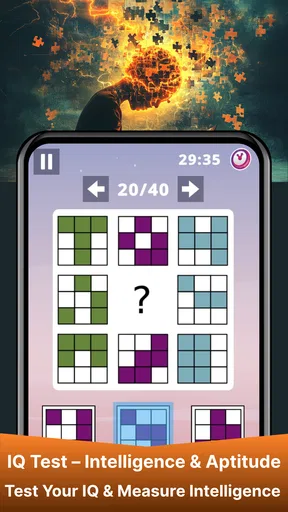
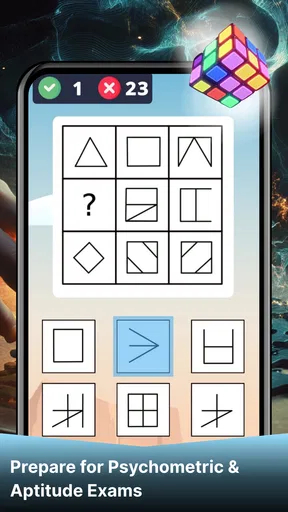
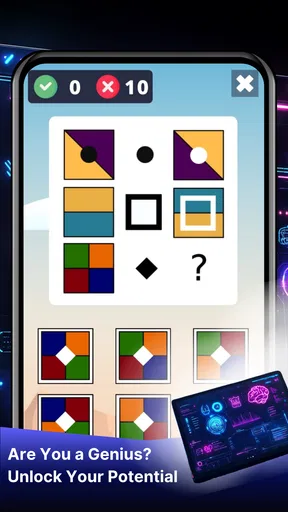
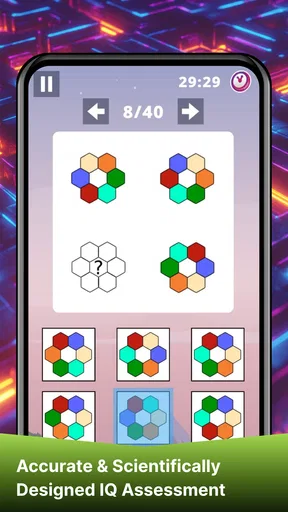
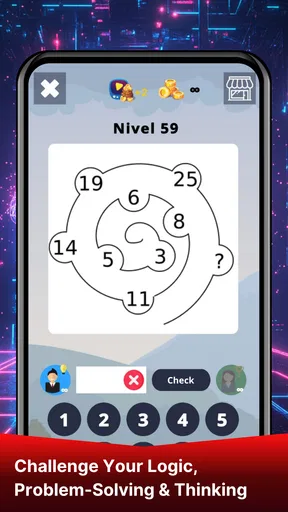
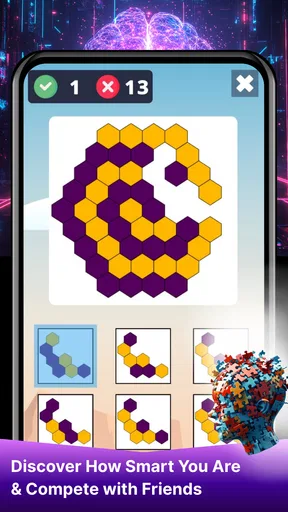
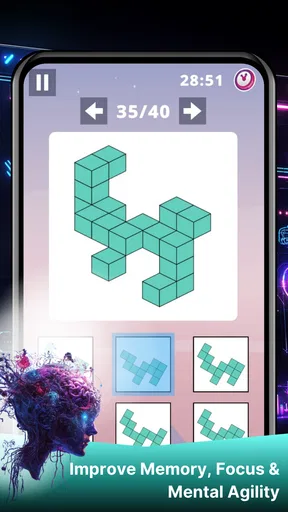
Our Review of IQ Test: Logic Brain Training
 Analysis by Appyee
I approached IQ Test: Logic Brain Training expecting a quick collection of brain teasers, and that is still the best way to understand it. This is a free trivia game from Trasco studio that mixes logic questions, riddles, IQ-style challenges, and math puzzles into short sessions. I found it most enjoyable when I treated it as a mental warm-up rather than a formal intelligence assessment.
The appeal is simple: you open the game, face a problem, make a choice, and move on. That makes it easy to fit into a spare moment, whether I am waiting for an appointment or taking a break from work. It is aimed at Everyone, runs on Android 6.0 or later, and the current version is 2.22. The store short description calls it “IQ Test,” but in practice it feels broader than a single test because the experience covers several puzzle styles.
How the current experience feels in everyday use
The strongest part of the game is its low commitment. I do not need to prepare a notebook, learn a complicated rule set, or reserve a long evening for it. A few questions can create a useful change of pace, while a longer session gives me enough variety to avoid feeling like I am repeating one narrow quiz format.
That variety matters because logic, riddles, and arithmetic use different kinds of attention. A number problem may reward careful calculation, while a visual or wording-based riddle may depend more on noticing an assumption. I liked that change of mental gear. It also exposed a small weakness: if I was looking specifically for advanced mathematics, the broader puzzle mix could feel less focused than a dedicated math-training app.
I would describe the presentation as accessible rather than academic. The game is suitable for casual players and families who want light brain exercises, but I would not use the result as a serious measurement of intelligence. Puzzle performance depends on familiarity with common trick questions, reading style, concentration, and whether a particular format suits you. It is better viewed as recreational brain training than as a scientific IQ evaluation.
Short sessions are where it makes the most sense
My preferred way to use it is in small blocks. Instead of rushing through every available challenge, I stop after a handful of questions and note which mistakes came from calculation and which came from reading too quickly. That turns a casual game into a modest attention exercise. It also prevents the familiar problem of guessing repeatedly just to reach the end.
A realistic example would be a student taking a break between study periods. The app can provide a different kind of concentration without requiring the commitment of a full game. An office worker could use it during a short commute or lunch break, although I would avoid playing while walking or doing anything that requires attention. For families, the Everyone rating makes it easier to consider for shared play, but younger players may still need help understanding why a trick question works.
One useful habit is to read each question twice before answering. Riddle-style challenges often test interpretation as much as knowledge, and a fast response can turn an easy problem into an avoidable mistake. When a math puzzle appears, I prefer estimating the answer first and calculating afterward. That simple two-step process helps separate a genuine reasoning error from a careless arithmetic slip.
What the mix of puzzles does well
The combination of formats keeps the experience from becoming a plain question-and-answer drill. Logic puzzles encourage pattern recognition, riddles challenge assumptions, and math problems add a more procedural type of thinking. I found the contrast useful because it made me aware of how differently I respond to each category.
There is also value in the pause before answering. A good puzzle game makes me slow down just enough to examine the wording. This one works best when I resist the urge to treat every question like a speed contest. If I am tired, I can still play, but my results become less meaningful because I am testing patience and attention as much as reasoning.
For that reason, I would recommend keeping a simple mental record of recurring mistakes. If I repeatedly miss questions because I overlook a condition, I need to improve careful reading. If I struggle mainly with calculations, I may benefit from a separate mathematics app. The game can reveal habits, but it cannot replace targeted practice in a specific subject.
What the current version tells me about the product’s direction
The current version, 2.22, suggests a product that has continued beyond its original release on July 15, 2022. That is relevant for anyone deciding whether to install it today: the app is not presented as an abandoned one-off experiment, and its established presence is reflected in more than 1 million installs and an average rating of 4.6 from around 35 thousand ratings.
Those figures do not guarantee that every puzzle will suit every player, but they do indicate that the basic concept has found a substantial audience. I also noticed that the game’s identity remains clear. It is not trying to become a full educational platform, a competitive multiplayer title, or a story-driven adventure. Its continuing value comes from quick, self-contained mental challenges.
At the same time, I would be careful about reading too much into a version number. A newer version does not automatically mean that the game has solved every issue or added the exact features a particular player wants. The practical question is whether the present puzzle mix fits your habits. For me, it does when I want variety and convenience, but not when I need a structured course with measurable progression in one skill.
How existing users may experience the evolution
Players who have used the game for a while will probably appreciate the stability of its central idea. Someone returning after an earlier installation can still approach it as a familiar collection of brain challenges rather than relearning an entirely different system. That continuity is helpful for casual users who do not want a game to become overloaded with mechanics.
The trade-off is that familiarity can reduce surprise. Once I understand the general style of a puzzle collection, I become better at recognizing the kinds of traps it may use. That can make me feel more capable, but it also means improvement may reflect experience with the format rather than a broad increase in reasoning ability. I would judge progress by whether I read more carefully and make fewer careless errors, not by treating a score as a permanent label.
For a returning player, my advice is to change the way you play. Do not simply chase completion. Spend one session answering quickly, another session explaining each answer to yourself, and a third session revisiting the questions that caused hesitation. This creates more useful feedback from the same content and reduces the temptation to measure success only by how far you advance.
Where it compares with familiar alternatives
Compared with a traditional trivia app, this game places more emphasis on reasoning and trick interpretation than on recalling facts. That makes it a better choice for someone who wants to think through a problem instead of testing knowledge about history, entertainment, or geography. If your main goal is factual learning, a conventional quiz app will probably be more useful.
Compared with a dedicated mathematics trainer, it is less specialized. The math puzzles are part of a wider menu, so I would choose another option for systematic practice with arithmetic, algebra, or exam preparation. On the other hand, the broader mix is more welcoming when I want a relaxed session and do not want every question to involve numbers.
Compared with a formal cognitive-training program, the game feels lighter and easier to start. That is a strength for casual use, but a limitation for anyone expecting detailed performance analysis, a carefully staged curriculum, or professional assessment. I like it because it does not demand much from me; I would not select it when I need evidence of progress that can support a serious educational or clinical decision.
Small techniques that improve the experience
My first practical tip is to separate confidence from correctness. Before answering, I silently rate my confidence as low, medium, or high. When I am wrong despite high confidence, I pay special attention to the wording and assumptions. This is more revealing than simply seeing a correct or incorrect result.
Second, I avoid using the game as background noise. If I am watching a show or replying to messages, the puzzles become guesses rather than exercises. A quiet few minutes produces a much better experience, especially for riddles where one overlooked word changes the entire interpretation.
Third, I use mistakes as prompts for explanation. After a difficult question, I try to describe the reasoning in one sentence. If I cannot explain it, I probably memorized the answer or moved on too quickly. This approach makes the app more valuable for parents playing with children, because discussing the thought process is more useful than simply announcing who was right.
A fourth consideration is spending. The game is free to download, with in-app purchases ranging from $0.49 to $4.49 per item. I would begin with the free experience and decide later whether any optional purchase genuinely improves the way I play. Since the core attraction is short puzzle solving, I would not spend automatically just because I wanted to progress faster.
Where the game still falls short
The biggest limitation is scope. A collection of IQ-style puzzles can be entertaining and mentally stimulating, but it is not the same as a personalized training plan. I do not come away with a complete diagnosis of my strengths, and I would be skeptical of anyone using a casual score to make claims about their overall intelligence.
Another limitation is the possibility of repetition in the underlying puzzle style. Even when the topics change, many brain-training games rely on familiar patterns: identify the trick, spot the missing relationship, or calculate under pressure. Players who regularly use puzzle apps may recognize these structures quickly. That can make the game less satisfying for someone seeking genuinely difficult, novel problems.
There is also a mismatch between the phrase “IQ Test” and the wider experience. The title may attract users expecting one carefully designed assessment, while the actual appeal is the mixture of riddles, logic tasks, and math challenges. I think the broader interpretation is more enjoyable, but users wanting a standardized test should choose a purpose-built assessment instead.
I would also skip it if you dislike trial-and-error puzzle design. Some players enjoy discovering the intended trick; others find it frustrating when an answer depends on a particular reading of a question. If you prefer transparent rules, progressive difficulty, and clearly explained solutions, a structured puzzle course may feel fairer and more satisfying.
Who should install it, and who should look elsewhere
I recommend it to casual puzzle fans, families looking for short discussion starters, and adults who want a small mental break that is more active than scrolling. It is particularly suitable for people who enjoy switching between wordplay, logic, and basic mathematics instead of committing to one subject.
I would be more cautious about recommending it to students preparing for a specific exam. The game may sharpen attention and flexible thinking, but it should sit beside subject-specific study rather than replace it. The same applies to anyone seeking a formal IQ result, professional cognitive screening, or a detailed record of improvement.
Device compatibility is relatively broad because Android 6.0 is the minimum operating system. That makes it a practical candidate for older compatible phones, but I would still judge the experience on the device you intend to use. A small screen can make careful reading less comfortable, and puzzle games lose much of their value when the player is straining to see or rushing through cramped text.
What I would watch as the app continues
If Trasco studio continues developing the game, I would most like to see deeper separation between puzzle types. Clearer grouping could help a player choose a short math session, a riddle session, or a logic-focused session without losing the convenience of the mixed collection. That would preserve the casual character while making the app more useful for deliberate practice.
I would also watch for how the balance between accessibility and challenge develops. Beginners need approachable questions, but experienced players need reasons to return beyond familiarity. More thoughtful progression, better explanations after mistakes, and ways to revisit weak areas would make the game feel more like training without turning it into a heavy educational product.
Those are expectations rather than claims about features already present. My current judgment is based on what the game offers as a compact trivia experience: it is easy to start, broad enough to stay interesting for casual sessions, and best when I use it to examine my thinking habits rather than chase a definitive IQ label.
Overall, IQ Test: Logic Brain Training is a worthwhile free download for anyone who enjoys accessible brain teasers and wants something that can be played in short bursts. Its Everyone rating, broad Android compatibility, and established audience make it approachable, while the optional purchases mean I can try the experience before deciding whether to spend anything.
I would recommend it with one clear condition: keep your expectations realistic. This is a casual logic and trivia game, not a replacement for formal assessment or focused study. When I treat it as a daily mental warm-up, its mixture of riddles, reasoning, and math puzzles works well. When I expect scientific measurement or advanced instruction, a more specialized alternative is the better choice.
Verdict
Strengths of IQ Test: Logic Brain Training
- Offers varied logic puzzles to exercise reasoning and pattern recognition.
- Short challenges make it easy to practice during brief breaks.
- Progress tracking helps users monitor completed tests and improvement.
- Simple interface keeps navigation accessible for most users.
- Useful as casual mental stimulation without requiring an internet connection.
Limitations of IQ Test: Logic Brain Training
- Some questions may feel repetitive after extended use.
- Results are not a substitute for a professionally administered IQ test.
- Difficulty can vary noticeably between puzzles.
- Hints or extra attempts may be limited or tied to in-app purchases.
- Ad interruptions can reduce focus during timed challenges.
Similar Picks in This Category
View All
Millionaire 2026 Quiz & Trivia
Quiz & Trivia Games by Submarine Apps4.5

Brain Test 2: Tricky Stories
Unico Studio4.7

Trivia Crack: Brain Quiz Games
etermax4.4

QuizzLand. Quiz & Trivia game
Quiz & Trivia Games by Mno Go Apps4.8

Brain Test: Tricky Puzzles
Unico Studio4.7

Logo Quiz
bubble quiz games4.5
Frequently Asked Questions
What is IQ Test: Logic Brain Training, and what can users expect from it?
IQ Test: Logic Brain Training is a puzzle-focused app designed to challenge reasoning, pattern recognition, memory, concentration, and problem-solving skills. After opening the app, users typically work through short logic questions and brain-training exercises that become progressively more demanding. It is best viewed as an entertaining mental workout rather than a formal psychological assessment or a definitive measurement of intelligence.
Is IQ Test: Logic Brain Training suitable for beginners and experienced puzzle players?
The app can generally be used by both beginners and experienced players because its questions are presented in a progression from simpler challenges to more complex logic problems. Beginners may need time to become familiar with the question formats, while regular puzzle fans can focus on improving speed and accuracy. Taking breaks is recommended if the difficulty starts to feel frustrating.
Does the IQ test provide an accurate or official intelligence score?
The score generated by IQ Test: Logic Brain Training should not be treated as an official IQ result. Mobile brain-training apps are usually created for entertainment and informal self-evaluation, and their scores can be affected by familiarity with puzzles, concentration, language ability, screen size, and test conditions. For a professionally administered intelligence assessment, users should consult a qualified psychologist or recognized testing organization.
Can the app be used without an internet connection, and are there advertisements or in-app purchases?
Availability of offline features, advertisements, and optional purchases can depend on the app version, device, region, and updates released by the developer. Some exercises may work without a connection, while results, synchronization, or additional content may require internet access. Before downloading, users should check the current Google Play or App Store listing for pricing, subscriptions, advertising details, and required permissions.
What is the best way to use IQ Test: Logic Brain Training effectively?
For the most useful experience, complete the exercises when you are rested, focused, and not being interrupted. Read every question carefully, avoid guessing too quickly, and review mistakes instead of concentrating only on the final score. Repeating challenges can help you become familiar with the formats, but the app should be used as a fun way to practice mental skills rather than as a medical, educational, or professional evaluation.
Play our best games!


